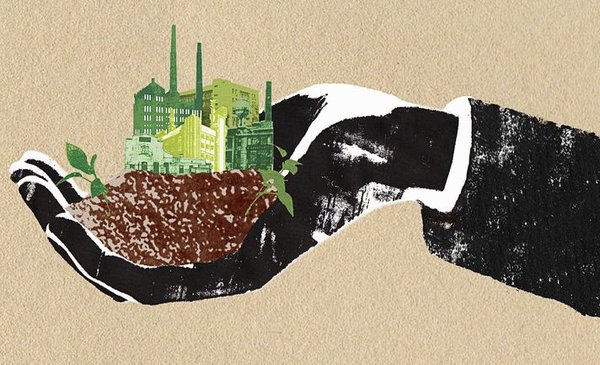

Once upon a time, corporate brands scrambled to become pillars of Corporate Social Responsibility, aka CSR. CSR meant that a corporation had responsibilities for people and planet as well as profit. Enterprises had to find ways to operate in ways that benefited society and the environment, as well as shareholders. Along with fiduciary performance, organizations had to incorporate ethical, environmental, and societal impacts into strategic planning. CSR is all-encompassing, inclusive, and nondenominational: a focus on all stakeholders, not just investors. Sadly, CSR was a fairy tale with an unhappy ending.
In today’s business landscape, the CSR movement is largely defunct. To the chagrin of many, some of its remaining bastions are enterprises that built CSR into their brands from the start: Patagonia, Ben & Jerry’s, Chipotle (Food with Integrity). Many CSR programs deflated as efforts to eliminate DEI programs gained ground. DEI was a part of CSR. A focus on “in-the-year-for-the-year” profits also doomed CSR as financial engineers saw broad betterment as budgetary betrayal. The question about CSR was always, “Does it pay?” “Does it pay?” was always about performance, stock price, and shareholders.
This article is part of Branding Strategy Insider’s FREE newsletter. Join the world’s smartest marketers and subscribe here for actionable insights delivered directly to your inbox.
Too many massive tech companies have devoted more visible attention to employee perks, including all-day meals, gyms, and other comforts, than to CSR. Google once prominently embraced “Don’t Be Evil.” In 2018, those words moved from the preface of its code of conduct to a single reminder at the end. If the November 2026 election results show anything about business, it is that putting money über alles is a strategy for putting your personal and corporate brands at risk. The New York Times points out that “Tech Billionaires Face Tricky Political Waters After Democratic Sweep.” The building of data centers and unregulated growth of AI are perceived by many voters as affronts to community, environment, well-being, and humanity. Many perceive social media as hazardous for children, teens, and young adults.
Tech brand CEOs are about to find out whether their behaviors over the past years will negatively impact their corporate brands. For many of these tech CEOs, the corporate brand and the personal brand are entangled.
The Corporate Brand Promise
Every brand is a promise about what it will do for you. “I promise your clothes will be clean.” “I promise that you will have teeth in your head when you die.” “I promise you the ultimate driving experience.”
Brands also tell the story of who they are and what they believe, not just what they promise. Corporate brands have a special opportunity and responsibility. In a world of uncertainty and diminishing institutional, social, and political trust, a corporate brand signals where it is going, what it will provide in the future, what its values are, and how it will behave. A strong corporate brand signals that a brand promise can be trusted to do things right and to do the right things.
When deciding whether to do business with, purchase from, work for or invest in an organization, knowing and believing in its integrity, values and intentions matters more than ever. What a company stands for can be as important a public signal of who we are as the car we choose to drive.
Corporate brands are part of the public dialogue. Corporate brands face increased media scrutiny. When something happens, it is the corporate brand that is held responsible. The court of public opinion is open. 24/7. If managed properly, a corporate brand can generate a reservoir of Trust Capital that serves as a safeguard in troubling times or during a crisis. If not, your brand can be tainted, as Perrier was in 1990 when the carcinogen benzene was found in its water. At the time, Perrier was the bottled mineral water. Look at the chill section at your local market: you need a road map to find a bottle of water.
Greatness Without Goodness
Now would be a really good moment for the always-in-the-news tech CEOs to put effort behind CSR. The public wants corporate brands designed for the greater good rather than the greed of being great. The public voted for human decency over tech regency. Being great does not always align with being good. Ivan the Terrible was Grand Prince and Tsar of Russia. He ruled a great amount of territory. But his greatness is defined by the great cost to his people and the great hit to Russia’s economy.
CSR can expand a corporate brand’s authority through being ethical, moral, honest, trustworthy, incorruptible and unimpeachable. Greatness without goodness must not be the goal. It is not just the problems with AI. Think about what we are learning from recent court cases dealing with allegedly harmful behaviors towards children. The financial settlements are huge. Google, Meta and TikTok have filed lawsuits to block a California law restricting social media features that may encourage compulsive use among children under 16. The companies argue that the law violates their free-speech rights. Whatever the courts decide, stakeholders will make their own judgments about the companies’ conduct. A key responsibility of the corporate brand is to be a good citizen. Good citizenship focuses on sustainability and on the treatment of all stakeholders, including children.
The Business Case For CSR
For corporate brands that make their money off data, it is ironic how little attention some tech CEOs appear to pay to the data on CSR and its effect on the corporate brand. For example, 2013 research showed that building a strong corporate brand is essential because a strong corporate brand acts as a major value advantage. A strong corporate brand can have a profitable effect on a product or service brand, which in turn can increase profitability for the firm and its portfolio. Research also shows a link between the corporate brand and CSR.
Data from Edelman, the global authority on corporate trust and trustworthiness, indicate that corporate brands are “rewarded or punished” based on whether or not they share the same personal values as their customers or potential customers.
CSR can be a business advantage. The Conference Board presented a 2017 research report based on interviews with CEOs. The Conference Board summarized the CEO views as follows: “The entire societal license to operate relies on building trust with a broad base of stakeholders, including customers, employees, government, and society at large.”
Social responsibility is a corporate responsibility. CSR is the conscience of the company. Studies reported in the 2012 Journal of Database Marketing & Customer Strategy Management (yes, 14 years ago!) indicate that a company’s positive social behavior positively affects organizational performance and has a strong relationship with economic performance.
Other research from 2017 shows that consumer perceptions of corporate social responsibility influence how customers perceive brands, affect intentions to purchase and patronize a retailer, and affect firms’ financial performance.
When Reputation Is Damaged
When a corporate brand finds itself in a crisis of its own making, the damage is costly in both reputational and financial terms. To this day, Exxon is still associated with the Valdez oil tanker that ran aground. BP is still considered by many to be an environmental despoiler, no matter how much money it spends to correct that image. The film Deepwater Horizon, with John Malkovich, Kate Hudson, Mark Wahlberg and Kurt Russell, keeps the disaster in the public imagination. Audi has never quite removed the stain from its emissions-defeating technologies. Decades earlier, the brand faced a public-relations disaster over allegations of unintended acceleration, which Audi attributed to driver error.
Money can be spent to repair physical, environmental, and social damages. But that money does not easily or permanently fix reputations. Reputation is all about what you and your corporate brand have accomplished. “What did you do for me, for my world?”
The seminal book by Jim Collins, Good to Great, focused on how good companies became great companies. Now, with a public, civic backlash against the tech barons and their machinations, their corporate brands must turn the power of political greatness into “for the greater good” behaviors.
An Ethical Framework For Tech CEOs
To save the reputations of their corporate brands and their personal brands, to create a successful future and to underpin any forthcoming self-regulation, tech CEOs must commit to a four-point ethical framework: 1) Commit to being a Credible Source; 2) Commit to a Reputation for Excellence; 3) Commit to being a Pillar of Integrity; and 4) Commit to a Responsibility Ethic.
1. Being a Credible Source means consistently providing true, trusted information about the company and its actions. Credibility is all about belief: do I believe that you will do what you say you will do? For a corporate brand, this means being predictable, reliable, capable, and competent. It means having a quality perception. It means providing superior complaint resolution and satisfaction with its behavior as a national or global citizen. It means being perceived as an expert in the areas in which it or its brands compete.
All stakeholders should have confidence in what the brand communicates. All stakeholders should believe that the brand will answer questions accurately and truthfully. When stakeholders perceive a brand to be a credible source, they use its past actions to predict future behaviors. Please, do not model yourselves after the tobacco CEOs who swore before Congress that nicotine was not addictive, cigarettes were not dangerous to health, and tobacco brands did not market to minors. Just not credible.
2. Having a Reputation for Excellence means continually behaving in the same quality manner each time, every time, across geography. Reputation is the backward-facing evaluation of past experiences with a company or brand. It is the amalgam of the brand’s past behaviors and results. Reputation also signals the brand’s ability to deliver valued outcomes across multiple stakeholder constituencies. Make sure that your reputation is stellar. Having a reputation for excellence is a competitive advantage. Because reputation is a collection of stakeholder perceptions over time, the brand can manage its reputation but cannot create it by decree.
3. Being a Pillar of Integrity means making sure that all actions and behaviors, internally and externally, have stakeholders’ best interests at heart, for today and for tomorrow. It means that external constituent groups perceive the brand as fair, impartial, honest, open-minded, truthful and just. Be honest. Be uncompromising when it comes to accountability. Be principled.
4. Having a Responsibility Ethic means the brand behaves as an aware, effective global citizen, acting and reacting positively on behalf of people, communities, nations, the planet, and society in general. A brand’s conduct and character are critical.
Being an admired brand, having great managerial talent and processes, having admired leadership, and being incredibly innovative are all critical elements for quality and revenue growth. But these elements alone will not lead the public to perceive the brand as trustworthy. Tech CEOs need to focus on building a great brand for the greater good.
The Blake Project helps leadership teams connect brand strategy to business performance and enterprise value. Explore our work.
Great brands for the greater good are not only defined by the quality of their products and services. Great brands for the greater good are built on the greatness of their ethics. Dishonesty, profiteering, and malfeasance should not be tolerated. Corporate brand leadership must not only ask, “What is the future we wish to create in which our brand will win?” Corporate brand leadership must also ask, “What is the impact my brand will have on that future world in which my brand will win?”
The Consequences Of CEO Behavior
The November 2026 elections delivered a warning to tech leaders. The actions of tech CEOs are brand actions. Their behavior affects how stakeholders see the companies they lead, whether those CEOs intend it or not. Example: one possible reason for the demise of the Tesla Cybertruck is fallout from the actions of its leader. Tesla has announced plans to wind down production in 2027, after years of disappointing sales.
If tech corporate brands want to reclaim or reframe external perceptions, a large dose of CSR might help. A “goodness” place to start is the ethical framework: be a credible source, earn a reputation for excellence, become a pillar of integrity, and practice a responsibility ethic.
To be successful, the corporate brand must focus on value for customers, value for employees, value for suppliers, value for owners, value for shareholders, value for local communities. Leveraging and maximizing stakeholder-perceived brand value is foundational. Without stakeholders who value what the brand offers, the brand will not generate sustainable, profitable growth.
Contributed to Branding Strategy Insider by Joan Kiddon, Partner, The Blake Project, author of The Paradox Planet: Creating Brand Experiences For The Age Of I.
At The Blake Project, we help leaders turn brand into a disciplined driver of financial performance — strengthening pricing power, competitive position, and enterprise value. Email us to start a conversation about enduring profitable growth. For The EBITDA.